Request Quote
Request Quote
ARYOUR INTEGRATED SOLUTION

Design Considerations for Industrial Wastewater Treatment Systems

  In industrial environments, wastewater treatment is more than just an environmental requirement — it’s a critical component of operational efficiency, compliance, and long-term sustainability. Whether you're managing a manufacturing facility, processing plant, or industrial park, your Industrial Effluent Treatment System (IETS) must be designed to handle specific contaminants, flows, and discharge requirements. This article […]
Read More

What Happens After You Flush? A Look Inside Modern Sewerage Systems

For most people, flushing the toilet is a simple, everyday act. But have you ever wondered where all that wastewater goes? What happens after it disappears down the drain? Behind the scenes, an intricate network of pipes, pumps, and treatment systems goes to work. In this article, we’ll walk you through what happens after you […]
Read More

5 Things You Didn't Know About Water Pollution

  When we hear the term water pollution, we often imagine plastic floating in rivers or dark wastewater being dumped into the sea. While these are real concerns, water pollution is far more complex — and surprisingly closer to home than most people realize. Here are 5 things you probably didn’t know about water pollution […]
Read More

What Is a Wastewater Treatment Plant and How Does It Work?

Wastewater is an inevitable byproduct of human and industrial activity. Every time we flush a toilet, drain a sink, or operate a factory, we generate wastewater — a mixture of water and contaminants that can harm the environment if left untreated. This is where wastewater treatment plants (WWTPs) come into play. These facilities are essential […]
Read More
Design Considerations for Industrial Wastewater Treatment Systems
  In industrial environments, wastewater treatment is more than just an environmental requirement — it’s a critical component of operational efficiency, compliance, and long-term sustainability. Whether you're managing a manufacturing facility, processing plant, or industrial park, your Industrial Effluent Treatment System (IETS) must be designed to handle specific contaminants, flows, and discharge requirements. This article outlines key design considerations when planning an industrial wastewater treatment system in Malaysia — with a focus on functionality, regulatory compliance, and cost control.   1. Understand the Nature of the Effluent The foundation of any successful IETS begins with a comprehensive characterization of the wastewater. Key parameters include:
  • Biochemical Oxygen Demand (BOD)
  • Chemical Oxygen Demand (COD)
  • Total Suspended Solids (TSS)
  • Oil & Grease (O&G)
  • pH and temperature
  • Heavy metals or specific contaminants (e.g., ammonia, phenols, cyanide)
Different industries produce different wastewater profiles. For example:
  • Food processing: High in BOD and fats/oils
  • Textile: High in color, pH imbalance, and chemical load
  • Electronics: May contain metals and toxic compounds
A detailed lab analysis is necessary to determine treatment needs and system sizing.   2. Regulatory Compliance: DOE and EQA 1974 In Malaysia, all industrial wastewater discharge is regulated under the Environmental Quality Act (EQA) 1974, enforced by the Department of Environment (DOE). Key regulatory requirements:
  • Effluent must meet Standard A or B, depending on receiving water body
  • Companies must install and operate an approved IETS
  • Scheduled environmental monitoring and reporting must be conducted
  • Licensing or notification to DOE before system installation or upgrade is required
Failing to comply can result in:
  • Hefty fines
  • Legal action
  • Project approval delays
  • Operational shutdowns
  3. Design for Flow Variation and Peak Loads Industrial wastewater is rarely uniform. Flows and pollutant loads can vary throughout the day or week depending on production cycles. Designing a system that accounts for:
  • Peak flow rates
  • Shock loads of pollutants
  • Idle or maintenance periods
...ensures stability and avoids system failure or environmental breaches. Equalization tanks are often used to buffer fluctuations before treatment.   4. Modular and Scalable System Design Businesses grow, processes change — so should your treatment system. A well-planned IETS should be modular and scalable. This means:
  • The ability to add new units without major reconstruction
  • Flexible process flow adjustments (e.g., bypass, recycle loops)
  • Component redundancy for maintenance (e.g., dual blowers or pumps)
Scalability ensures long-term value and allows upgrades to meet new standards or production changes.   5. Selecting the Right Treatment Technology The treatment process should match the effluent characteristics and site conditions. Common technologies include:
  • Physical Treatment: Screening, grit removal, sedimentation
  • Chemical Treatment: pH adjustment, coagulation-flocculation, oxidation
  • Biological Treatment: Aerobic (e.g., activated sludge, MBBR), anaerobic (e.g., UASB, digesters)
  • Advanced Treatment: Membrane filtration (MBR/UF/RO), activated carbon, ozone
Each has pros and cons based on:
  • Space constraints
  • Capital vs operational costs
  • Discharge standards
  • Operator skill level
An experienced consultant will evaluate these factors to determine the most cost-effective and compliant setup.   6. Automation and Instrumentation Modern IETS systems benefit greatly from automation and real-time monitoring. This includes:
  • SCADA or PLC systems for remote control
  • Online sensors for pH, DO, turbidity, and flow
  • Alarm systems for abnormal parameters
Automation not only improves operational consistency but also reduces human error and supports documentation for compliance reporting.   7. Operation, Maintenance & Manpower Requirements Even a well-designed system can fail without proper operation and maintenance (O&M). During design, consider:
  • Ease of access for cleaning and repair
  • Training level of available personnel
  • Spare part availability
  • Ongoing O&M costs
Consultants should provide Standard Operating Procedures (SOPs) and post-commissioning training for your technical team.   8. Cost Considerations: CAPEX vs OPEX The total lifecycle cost of an IETS includes both Capital Expenditure (CAPEX) and Operational Expenditure (OPEX).
  • CAPEX: Initial equipment, civil works, design fees
  • OPEX: Electricity, chemicals, maintenance, manpower
Design decisions — such as energy-efficient blowers, gravity-fed layouts, or chemical dosing controls — can greatly influence long-term cost efficiency. A common mistake is under-budgeting for operational costs, which may lead to system neglect and regulatory non-compliance.   9. Post-Treatment Options: Sludge Management and Reuse Industrial treatment systems generate sludge and by-products that must be handled responsibly. Consider:
  • Dewatering systems (e.g., filter press, decanter)
  • Scheduled removal and disposal by licensed contractors
  • Safe handling and storage infrastructure
In some industries, treated effluent can be reused for non-potable purposes like cooling towers, washing bays, or landscaping — reducing water bills and supporting sustainability goals.   10. Documentation, Licensing, and DOE Submissions A complete IETS project includes:
  • Engineering drawings
  • Hydraulic calculations
  • Process flow diagrams
  • DOE Form C or other submission documents
  • Effluent discharge licenses
Working with a licensed consultant ensures all submissions are properly prepared and approved, avoiding costly project delays.   Conclusion Designing an industrial wastewater treatment system is a complex process that requires balancing compliance, efficiency, budget, and operational feasibility. By thoroughly understanding your effluent characteristics, planning for future growth, and choosing the right technology — you can ensure your facility meets environmental standards while supporting business continuity. Whether you're upgrading an existing system or planning a new one, working with an experienced engineering partner like Aryour helps streamline the process and avoid costly mistakes.
Read More
What Happens After You Flush? A Look Inside Modern Sewerage Systems
For most people, flushing the toilet is a simple, everyday act. But have you ever wondered where all that wastewater goes? What happens after it disappears down the drain? Behind the scenes, an intricate network of pipes, pumps, and treatment systems goes to work. In this article, we’ll walk you through what happens after you flush — and why modern sewerage systems are one of the most important (but least appreciated) public health achievements of our time.   1. The Journey Begins: Household Plumbing When you flush the toilet or drain the sink, wastewater from your home travels through internal plumbing and into a larger sewer pipe. In a typical residential building, all wastewater sources — including the bathroom, kitchen, and laundry — are connected to one main outflow line. This pipe then leads to the municipal sewer system (for urban areas) or to a private sewage treatment system (common in housing developments or rural areas).   2. Sewer Networks: Underground Highways for Wastewater Once the wastewater leaves your property, it enters a municipal sewer line — a vast network of underground pipes designed to carry sewage to a treatment plant. There are two main types of sewer systems:
  • Separate Sewer System: One pipe carries sewage; another handles stormwater runoff.
  • Combined Sewer System: A single pipe carries both wastewater and rainwater — common in older cities but more prone to overflow during storms.
Gravity often does most of the work, but in some cases, pumping stations are used to move wastewater from lower to higher elevations.   3. Arrival at the Wastewater Treatment Plant Eventually, the wastewater reaches a Wastewater Treatment Plant (WWTP) — the heart of the entire process. Here, it goes through multiple stages to remove contaminants, solids, and harmful microorganisms. The basic stages include:
  • Primary Treatment: Removal of large solids and floating materials.
  • Secondary Treatment: Biological processes break down organic matter using bacteria.
  • Tertiary Treatment (optional): Advanced filtration and disinfection to ensure water quality before discharge or reuse.
The goal is to clean the water so it can safely return to the environment — usually into a river, sea, or for reuse in irrigation or landscaping.   4. Sludge and Solids: Not Everything Flows Away While water is treated and released, the solid waste (sludge) separated during the process must also be managed. Sludge is thickened, digested (to reduce pathogens and odor), and then dewatered. It may be:
  • Sent to landfills
  • Incinerated
  • Reused as fertilizer (if safely treated and approved)
Proper sludge management is a critical part of protecting the environment and public health.   5. What About Chemicals and Micro-Pollutants? Modern wastewater contains more than just human waste. It also includes:
  • Detergents
  • Pharmaceuticals
  • Oils and grease
  • Microplastics
  • Industrial byproducts (in some areas)
Advanced treatment systems are now being used to target these pollutants — including membrane bioreactors (MBR), UV disinfection, and activated carbon filters. Public education is also key: reducing what we flush or pour down the drain helps lighten the load on these systems.   6. Returning to Nature — or Being Reused Once treatment is complete, the cleaned water (called effluent) is released back into the environment or reused. In Malaysia, treated water from municipal WWTPs typically flows into rivers. However, in some industrial settings or newer developments, treated water is reused for:
  • Landscaping or irrigation
  • Industrial cooling
  • Toilet flushing (in commercial buildings)
  • Firefighting reserves
With growing pressure on water resources, wastewater reuse is becoming an increasingly important sustainability strategy.   7. The Role of Sewerage Systems in Public Health Modern sewerage systems are among the most important inventions in human history. Before centralized systems existed, untreated waste often contaminated water sources, leading to widespread disease. Today, these systems:
  • Prevent outbreaks of waterborne illnesses
  • Protect aquatic ecosystems
  • Ensure safe living environments for urban populations
  • Support long-term development and environmental resilience
  8. Challenges and the Way Forward Even with modern systems, challenges remain:
  • Aging infrastructure in older cities
  • Illegal discharges into sewer lines
  • Overloaded systems due to rapid urban growth
  • Public misunderstanding about what can and can’t be flushed
  • Climate change leading to more frequent stormwater overflows
The future of sewerage includes smart monitoring, green infrastructure, and integrated planning to ensure sustainable growth.   Conclusion Every time you flush, you set off a chain of events that relies on a hidden yet vital infrastructure system. From household plumbing to underground sewer lines, and from advanced treatment facilities to final discharge — it all works together to protect our health and the environment. Understanding what happens after we flush helps us appreciate the complexity of water management — and reminds us why responsible use and maintenance of these systems is everyone’s responsibility.
Read More
5 Things You Didn't Know About Water Pollution
  When we hear the term water pollution, we often imagine plastic floating in rivers or dark wastewater being dumped into the sea. While these are real concerns, water pollution is far more complex — and surprisingly closer to home than most people realize. Here are 5 things you probably didn’t know about water pollution — and why it's a problem that affects all of us.   1. Households Are a Major Contributor to Water Pollution Many people assume only factories or industrial plants pollute water. But in reality, households contribute significantly to water pollution every day.
  • Pouring used cooking oil down the sink
  • Using excessive detergent and cleaning chemicals
  • Improper disposal of medicines or personal care products
  • Litter that ends up in drains and rivers during rainfall
Even flushing "flushable" wipes can cause blockages and overload sewage systems. These everyday actions can disrupt wastewater treatment plants and pollute natural water sources.   2. Clean Water Doesn’t Mean Safe Water Water that looks clear isn’t always clean. Some of the most dangerous forms of pollution are invisible to the eye. Chemical contaminants, bacteria, and microscopic pathogens can exist in water that appears perfectly fine.
  • Agricultural runoff can carry fertilizers and pesticides into rivers
  • Industrial wastewater may contain heavy metals and toxins
  • Even untreated sewage can seep into groundwater during floods or system failures
This is why proper wastewater treatment is essential — to ensure not just clarity, but true water safety.   3. Water Pollution Can Affect the Air We Breathe Believe it or not, polluted water doesn’t just stay in rivers and lakes — it can affect air quality too. Stagnant, untreated wastewater produces gases like methane, ammonia, and hydrogen sulfide. These not only smell unpleasant but can also harm human health and contribute to greenhouse gas emissions. In large cities or densely populated areas, poor sewage management can lead to localized air pollution, particularly around drains and open sewer systems.   4. Most Water Pollution Starts on Land Water bodies don’t generate pollution on their own. Almost all water pollution originates from human activity on land:
  • Construction sites and exposed soil during rain
  • Landfills or illegal dumping near waterways
  • Leaking septic tanks or broken pipes
  • Industrial discharge that is untreated or partially treated
Even polluted stormwater — rain that runs off roads, parking lots, and rooftops — can carry oil, trash, and chemicals into rivers and lakes. This is why land-use planning and proper drainage systems are crucial for controlling water pollution.   5. You Can Help Reduce Water Pollution More Than You Think While governments, municipalities, and industries have major responsibilities, individuals can also play a big role in reducing water pollution. Here’s how:
  • Don’t pour fats, oils, or chemicals down the drain
  • Use phosphate-free detergents and limit chemical cleaners
  • Dispose of medicine, batteries, and paint properly — not in the sink or toilet
  • Maintain your home’s drainage and plumbing
  • Support eco-friendly brands and sustainable water projects
Even small changes in daily habits can reduce the burden on wastewater systems and improve the quality of our rivers, lakes, and oceans.   Conclusion Water pollution is not just an environmental issue — it's a public health and sustainability challenge that affects everyone. By understanding where pollution comes from and how it behaves, we can make smarter decisions at home, in business, and in infrastructure planning. Whether you're a homeowner, developer, or policymaker, it's important to know that every drop matters — and it starts with awareness.
Read More
What Is a Wastewater Treatment Plant and How Does It Work?
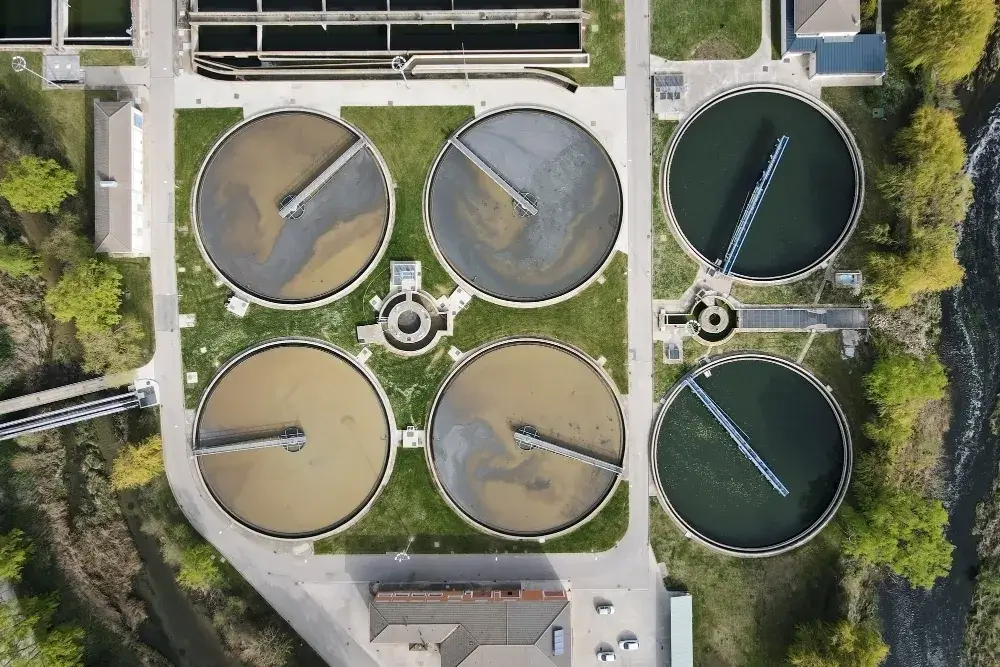
Wastewater is an inevitable byproduct of human and industrial activity. Every time we flush a toilet, drain a sink, or operate a factory, we generate wastewater — a mixture of water and contaminants that can harm the environment if left untreated. This is where wastewater treatment plants (WWTPs) come into play. These facilities are essential for cleaning wastewater and returning it safely to the environment or for reuse. In this article, we’ll explore what a wastewater treatment plant is, the processes involved, and why it is so critical to modern society.   What Is a Wastewater Treatment Plant? A wastewater treatment plant is a facility designed to remove contaminants from sewage and industrial wastewater. The primary goal is to clean the water to a level that is safe for discharge into rivers, lakes, or even for reuse in agriculture, landscaping, or certain industrial applications. WWTPs are a crucial part of urban infrastructure. They help protect public health, prevent environmental pollution, and support sustainable water management. Wastewater can come from:
  • Domestic sources (homes, toilets, kitchens)
  • Commercial buildings (offices, malls)
  • Industrial facilities (factories, processing plants)
  • Stormwater runoff (in combined sewer systems)
  Types of Wastewater Before diving into how WWTPs work, it’s important to understand the two major types of wastewater: Domestic or Municipal Wastewater Originates from homes and public facilities — it typically contains human waste, food scraps, soaps, and detergents. Industrial Wastewater Comes from manufacturing or production processes — it may contain chemicals, heavy metals, oils, and high organic loads. Both types require different levels of treatment, depending on the concentration and type of pollutants involved.   How Does a Wastewater Treatment Plant Work? The treatment process in a WWTP is typically divided into three major stages, with optional advanced steps depending on the desired water quality:   1. Primary Treatment – Physical Removal The goal of primary treatment is to remove large solids and floating materials.
  • Screening: Large debris like plastics, rags, and branches are removed through metal grates or screens
  • Grit Removal: Sand, gravel, and other heavy particles settle in a grit chamber
  • Sedimentation: Water is allowed to sit in a primary clarifier where suspended solids (sludge) settle to the bottom and oils float to the top for removal
By the end of primary treatment, around 50–60% of total suspended solids (TSS) are removed.   2. Secondary Treatment – Biological Process This stage focuses on removing dissolved and biodegradable organic matter using microorganisms.
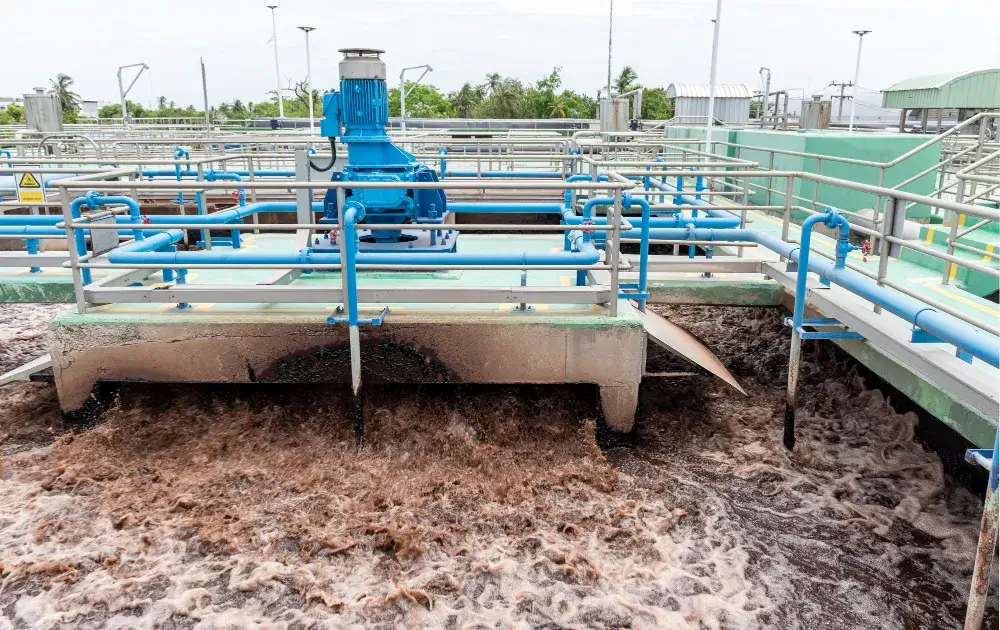
  • Aeration Tanks (Activated Sludge Process): Air is pumped into tanks to encourage bacteria to break down organic pollutants
  • Biological Filters or Bio-Reactors: In some plants, fixed media or membranes support bacterial growth for efficient breakdown
  • Secondary Clarifier: After biological treatment, the water enters another settling tank where microbes and remaining solids are removed
Secondary treatment removes up to 85–90% of BOD (Biochemical Oxygen Demand) and organic content.   3. Tertiary Treatment – Advanced Polishing Tertiary treatment is used when stricter water quality is required.
  • Filtration: Removes finer particles using sand filters, cloth, or membranes
  • Disinfection: Chlorine, UV light, or ozone is used to kill remaining pathogens before discharge
  • Nutrient Removal: Chemical or biological methods remove nitrogen and phosphorus, which are harmful in excess
Treated water from this stage is often suitable for discharge or non-potable reuse.   What Happens to the Sludge? During treatment, a significant amount of sludge (biosolids) is generated from sedimentation and biological processes. Sludge is treated separately through:
  • Thickening: Reducing water content
  • Digestion: Breaking down organic matter using anaerobic or aerobic methods
  • Dewatering: Using centrifuges or filter presses to extract remaining water
  • Disposal or Reuse: Treated sludge can be landfilled, incinerated, or used as fertilizer in agriculture (if properly processed)
  Why Are Wastewater Treatment Plants Important? 🌍 Environmental Protection WWTPs prevent pollution of rivers, lakes, and oceans by removing harmful contaminants before water is discharged. 🧬 Public Health Proper treatment eliminates pathogens and disease-causing organisms, reducing the risk of waterborne illness. 💧 Water Reuse With increasing water scarcity, treated wastewater is now reused for irrigation, landscaping, industrial cooling, and even drinking (after advanced treatment in some countries). ⚖️ Regulatory Compliance Most countries, including Malaysia, have strict environmental laws (e.g. under DOE and SPAN) that require wastewater to meet discharge standards. 🏙️ Urban Sustainability WWTPs enable cities and industries to grow without overwhelming natural water systems.   Types of Wastewater Treatment Technologies There are several types of systems used depending on capacity, space, and effluent standards:
  • Conventional Activated Sludge (CAS): Widely used, relies on aeration tanks and clarifiers
  • Membrane Bioreactor (MBR): Combines biological treatment with membrane filtration — ideal for compact areas with high-effluent quality needs
  • Sequential Batch Reactor (SBR): A time-based process where all steps occur in the same tank — useful for smaller communities or variable flows
  • Moving Bed Biofilm Reactor (MBBR): Uses floating biofilm carriers for enhanced microbial activity and compact footprint
  • Constructed Wetlands: A natural, eco-friendly method using vegetation and soil to treat wastewater — best for rural or decentralized setups
  Wastewater Treatment in Malaysia In Malaysia, wastewater treatment is governed by various agencies including:
  • SPAN (Suruhanjaya Perkhidmatan Air Negara) – for infrastructure and licensing
  • DOE (Department of Environment) – for effluent discharge compliance
  • JAS (Jabatan Alam Sekitar) – environmental regulation and enforcement
Municipal treatment is handled by Indah Water Konsortium (IWK), while private developers and industries often build their own Individual Sewerage Systems (ISS) or Industrial Effluent Treatment Systems (IETS). With growing urban development, proper wastewater management has become a national priority.   Conclusion A wastewater treatment plant is more than just a facility — it's a vital component of a functioning society. It protects our rivers, oceans, and communities by transforming polluted water into clean, safe discharge. From screening and sedimentation to biological treatment and disinfection, every stage plays a role in ensuring that our wastewater doesn't harm the environment or public health. As demand for water increases and regulations tighten, efficient and sustainable wastewater treatment systems will continue to be critical. Whether you’re a homeowner, a developer, or an industrial operator, understanding how these systems work helps promote better decisions for a cleaner, healthier future.

Read More

Need a Custom Engineering Solution?

Let Aryour help you plan, build, and deliver with confidence.
Quotation Request Form

**Your information is confidential and used only to respond to your inquiry. We do not share your data with third parties.
ARYOUR INTEGRATED SERVICES SDN. BHD.
Our Solution
Engineering Design
Construction
Project Management
Consultancy & Training
Feasibility Studies
Copyright © ARYOUR INTEGRATED SERVICES SDN. BHD.│ Registration No : 002972518H / 201903139063) │ Design by Denai Art
linkedin facebook pinterest youtube rss twitter instagram facebook-blank rss-blank linkedin-blank pinterest youtube twitter instagram